
Customer service channels are the various platforms and methods businesses use to communicate with customers who need help, have questions, or want to resolve issues. These touchpoints form the bridge between your company and the people who buy your products or use your services.
The role these channels play in customer experience cannot be overstated. A customer who reaches out through their preferred method and receives quick, helpful support is far more likely to remain loyal than someone forced to navigate an inconvenient or unresponsive system.
The landscape has shifted dramatically over the past decade. Businesses once relied solely on phone lines, perhaps supplemented by postal mail. By the mid-2010s, email had become standard, and companies began experimenting with live chat. Now, in 2026, customers expect to reach you through whatever platform they’re already using—whether that’s Instagram, a mobile app, or a self-service portal. This evolution from single-channel support to multichannel and omnichannel customer service reflects changing consumer behavior and technological capabilities.
The distinction matters because customer service communication channels directly impact satisfaction scores, retention rates, and even revenue. Companies that offer convenient, well-integrated support options consistently outperform those that don’t.
Traditional Customer Service Channels
Phone Customer Service
Phone support remains surprisingly resilient despite predictions of its demise. Speaking to a real person provides reassurance during complex problems or emotionally charged situations like billing disputes or service outages.
The main benefit is immediacy. Customers explain their issue, you ask clarifying questions, and you work toward resolution in real time. This back-and-forth is difficult to replicate through asynchronous channels. Phone support also handles nuance well—tone of voice, emotion, and urgency come through clearly.
The limitations are equally clear. Phone support is expensive, requiring trained staff during business hours (or around the clock for 24/7 operations). Wait times frustrate customers, especially when they’re stuck in poorly designed phone trees. Recording and documenting phone conversations for quality assurance adds another layer of complexity.
Best use cases include high-value transactions, technical troubleshooting that requires detailed explanation, situations where customers are elderly or less tech-savvy, and crisis management. Response time expectations have tightened—customers in 2026 expect to wait no more than two to three minutes during normal business hours.

Email Customer Service
Email became the default digital support channel in the early 2000s and maintains that position for certain types of inquiries. Customers appreciate the ability to explain their problem thoroughly, attach screenshots or documents, and receive a timestamped record of the interaction.
Benefits include asynchronous communication (customers don’t need to wait on hold), the ability to handle complex issues that require research or escalation, and lower staffing costs compared to phone support. Email works well for non-urgent requests and creates an automatic paper trail.
The primary limitation is speed—or lack thereof. Even fast email teams typically respond within four to six hours. Many customers now consider this glacially slow compared to live chat or social media. Email also lacks the personal touch of voice communication and can lead to frustrating back-and-forth exchanges when clarification is needed.
Email customer service works best for detailed product questions, account changes that require verification, formal complaints requiring documentation, and follow-up communication after an initial contact through another channel. Setting clear expectations about response times (and actually meeting them) is critical.
Digital Customer Service Channels
Live Chat Customer Service
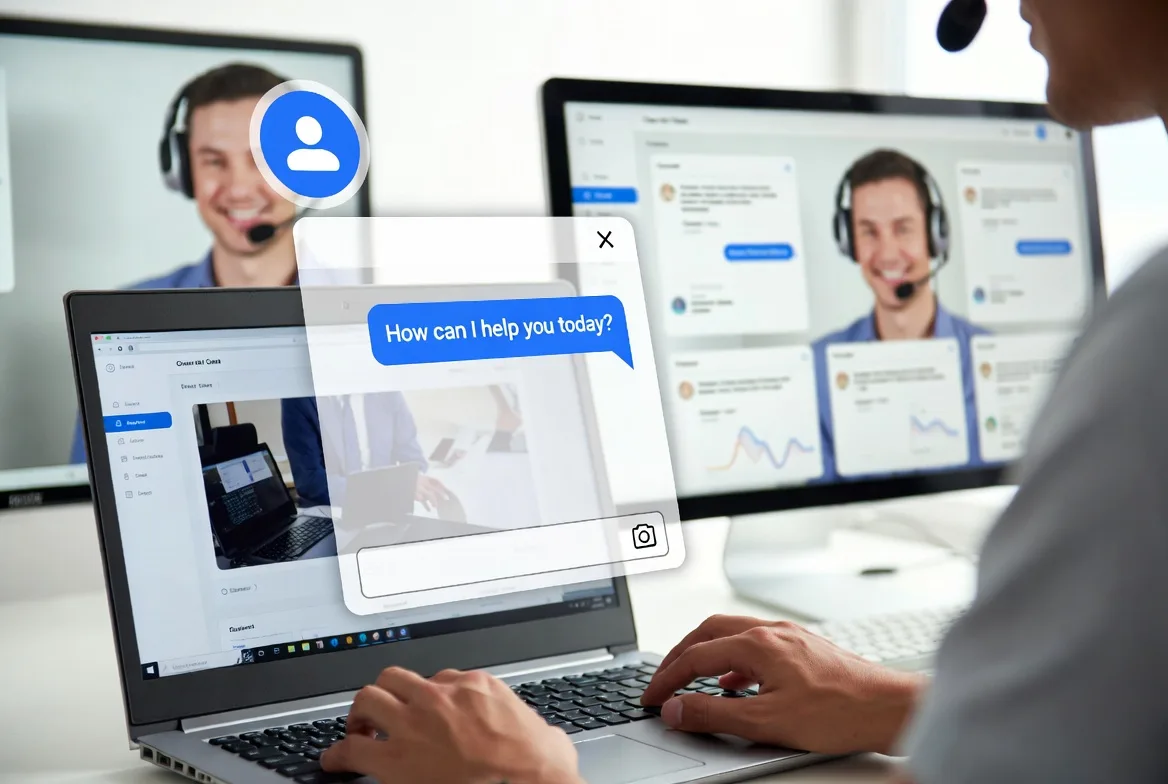
Live chat has become the workhorse of digital support for good reason. Customers get near-instant responses without picking up the phone, and agents can handle multiple conversations simultaneously, improving efficiency.
The channel excels at quick questions, pre-purchase inquiries, and guiding customers through simple processes. Modern chat systems integrate with CRM platforms, giving agents access to customer history and enabling personalized service. Chatbots handle routine queries, escalating complex issues to human agents.
Response time expectations are measured in seconds, not minutes. Customers who initiate chat expect a greeting within 30 seconds and meaningful engagement within a minute. This creates staffing challenges—you need adequate coverage during peak hours or risk frustrating the very customers you’re trying to help.
Live chat customer service works particularly well for e-commerce sites, SaaS companies with in-app support, and any business where customers need help while actively using your product or browsing your website. The main implementation consideration is ensuring your team can actually deliver the speed customers expect.
Social Media Customer Service
Social media transformed from a marketing channel into a critical support platform. Customers now tweet complaints, comment on Facebook posts, or send Instagram DMs expecting responses. The public nature of these interactions adds pressure—ignore a complaint on Twitter, and thousands of people might see your silence.
The unique feature of social media customer service is visibility. Resolve someone’s issue quickly and graciously, and you demonstrate your commitment to customer satisfaction for a broad audience. The inverse is equally true—bungle a response, and the reputational damage multiplies.
Platform preferences vary by demographic. Younger customers gravitate toward Instagram and TikTok, while Facebook remains popular with older demographics. LinkedIn serves B2B interactions. Twitter (now X) continues as a go-to for public complaints and real-time issues.
Response time expectations on social media are aggressive. Customers expect acknowledgment within an hour during business hours, with full resolution following soon after. The informal nature of these platforms requires a different tone than email—more conversational, less corporate.
Implementation means dedicating staff to monitor multiple platforms, establishing clear guidelines about tone and escalation procedures, and integrating social listening tools with your broader customer service infrastructure.
Self-Service Portals and Knowledge Bases
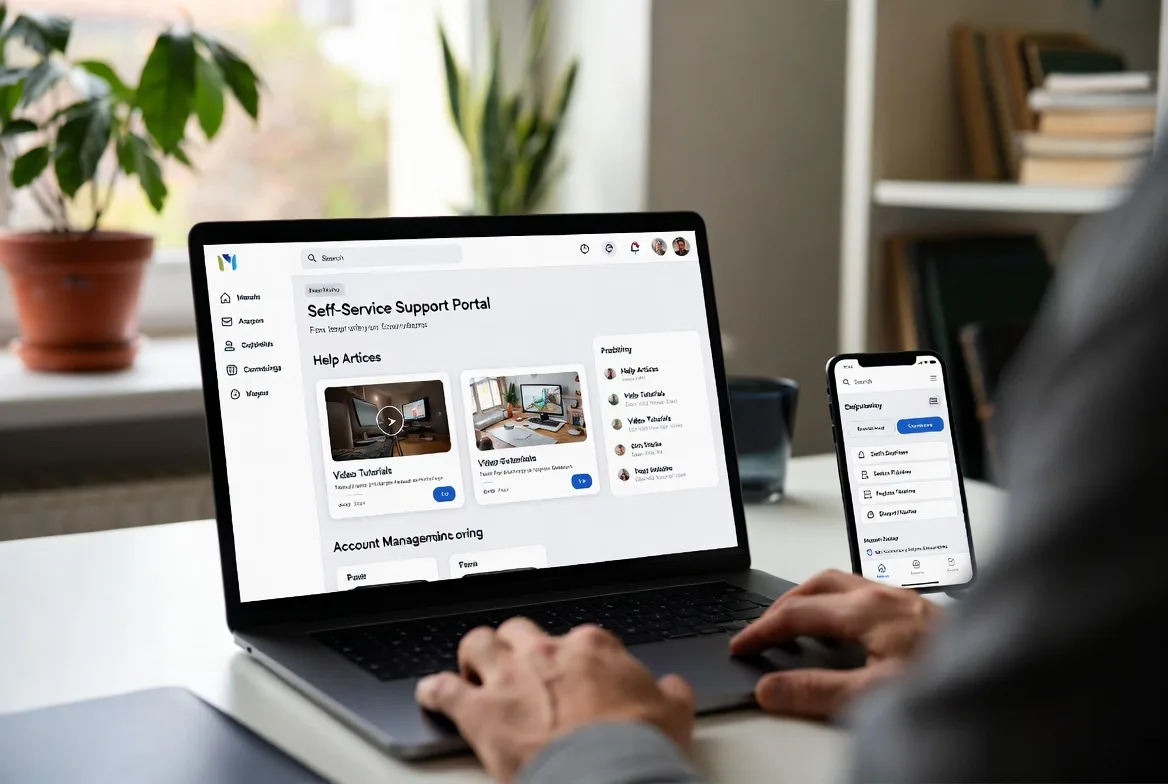
Self-service has grown from a nice-to-have feature to an essential component of modern support. Many customers prefer finding answers themselves rather than contacting support, particularly for simple how-to questions or account management tasks.
A well-designed knowledge base includes searchable articles, video tutorials, FAQs, and troubleshooting guides. Advanced portals allow customers to track orders, update payment information, manage subscriptions, and access account history without agent intervention.
The benefits are compelling: reduced support volume, 24/7 availability, and improved customer satisfaction for those who prefer self-sufficiency. Knowledge bases also serve as training resources for new support agents.
The challenge lies in keeping content current and actually useful. Outdated articles frustrate customers and erode trust. Search functionality must work well—if customers can’t find relevant articles quickly, they’ll abandon the knowledge base and contact support anyway.
Customer preferences vary widely. Some people exhaust self-service options before reaching out, while others immediately seek human interaction. Offering both options without forcing customers through unnecessary self-service hoops strikes the right balance.
Mobile App Support
For businesses with dedicated mobile applications, in-app support has become table stakes. Customers using your app expect to get help without leaving that environment.
In-app support might include chat widgets, help centers, video tutorials, or direct messaging with support teams. The key advantage is context—the app knows what the customer was doing when they encountered a problem, enabling more targeted assistance.
Push notifications can proactively address issues, inform customers about outages, or confirm that their support ticket has been updated. This creates a seamless experience that keeps customers engaged with your platform.
Implementation requires careful UX design. Support features must be easy to find without cluttering the interface. Integration with your broader support ecosystem ensures customers don’t receive conflicting information across channels.
Multichannel vs Omnichannel Customer Service
The terms multichannel support and omnichannel customer service are often used interchangeably, but the distinction matters significantly for customer experience.
Multichannel support means offering multiple ways to contact you—phone, email, chat, social media—but treating each channel as a separate silo. A customer might start a conversation via chat, follow up through email, and end up repeating their entire story over the phone because the channels don’t share information.
Omnichannel customer service integrates all channels into a unified system. Customer history, preferences, and previous interactions are accessible regardless of which channel they choose. Start a conversation on Twitter, continue it via email, and finish through chat—the agent sees the complete context.
Customer expectations have evolved rapidly. In 2026, most customers assume their support experience will be omnichannel even if they don’t use that term. They expect you to remember previous conversations, honor commitments made through different channels, and provide consistent information regardless of how they reach out.
Integration challenges are substantial. Legacy systems often resist connection. Different channels may use incompatible platforms. Training staff to work across channels while maintaining consistent quality requires significant investment.
| Feature | Multichannel Support | Omnichannel Customer Service |
|---|---|---|
| Channel integration | Separate silos | Unified platform |
| Customer data | Fragmented across channels | Centralized and accessible |
| Conversation continuity | Customer repeats information | Context preserved across channels |
| Staff training | Channel-specific specialists | Cross-channel generalists |
| Technology requirements | Basic (separate tools) | Advanced (integrated CRM/helpdesk) |
| Implementation cost | Lower initial investment | Higher upfront, better ROI |
| Customer experience | Inconsistent | Seamless |
The business case for omnichannel is strong despite higher implementation costs. Customer satisfaction scores improve, resolution times decrease, and staff efficiency increases when agents have complete context. The challenge lies in execution—truly integrated systems require organizational commitment beyond just purchasing software.
How to Choose the Right Customer Service Communication Channels

Selecting the appropriate types of customer service channels for your business requires analyzing several factors rather than simply copying what competitors do.
Customer demographics drive channel selection more than any other factor. If your audience skews older, phone and email remain critical. Younger customers expect chat, social media, and mobile app support. B2B customers often prefer email for documentation purposes while also valuing phone access for urgent issues.
Business size and resources impose practical constraints. A three-person startup cannot effectively manage six different support channels. Start with one or two channels you can execute well, then expand as you grow. Spreading yourself too thin across multiple channels creates a worse experience than focusing on fewer options.
Industry context matters significantly. Financial services customers expect phone support for security reasons. E-commerce thrives on chat for pre-purchase questions. SaaS companies need in-app support and comprehensive knowledge bases.
Budget considerations extend beyond software costs. Each channel requires staffing, training, and ongoing management. Phone support is expensive per interaction but may generate higher customer lifetime value. Self-service has high upfront development costs but scales efficiently.
Support complexity influences channel choice. Simple products with straightforward use cases work well with chat and self-service. Complex B2B software often requires phone support and dedicated account management.
Matching channels to customer journey stages creates strategic advantage. Pre-purchase inquiries benefit from chat—customers want quick answers while they’re ready to buy. Post-purchase onboarding works well through email sequences and video tutorials. Technical support might require phone or screen-sharing capabilities.
A practical framework: identify your three most common support scenarios, determine which channels best serve each scenario, assess your capacity to staff those channels adequately, and implement with clear quality standards. Expand only after mastering your initial channels.
The channel itself matters far less than the quality of the interaction it enables. Companies that obsess over offering every trendy new channel while delivering mediocre service across all of them will always lose to competitors who master three channels and execute them brilliantly.
Marcus Chen, VP of Customer Experience, Zenith Solutions
Common Mistakes When Managing Multiple Support Channels
Companies frequently stumble when scaling from one or two customer service channels to a broader multichannel support approach.
Inconsistent messaging across channels damages credibility quickly. When the chat team provides different information than the email team, customers lose trust. Establish clear documentation, regular team meetings, and shared knowledge bases to maintain consistency.
Understaffing is perhaps the most common error. Adding a new channel without adequate staffing creates longer wait times across all channels. Customers notice when you offer chat support but consistently show 15-minute wait times. Better to offer fewer channels with excellent service than many channels with poor coverage.
Poor channel integration creates the frustrating experience of customers repeating themselves. If your systems don’t connect, customers who start via email and follow up through chat must explain everything again. This wastes their time and damages satisfaction. Invest in proper integration before expanding channels.
Ignoring customer preferences means offering channels your team prefers rather than what customers actually want. Survey your customer base, analyze which channels they naturally gravitate toward, and allocate resources accordingly. Don’t force customers to use your preferred channel when they clearly want something else.
Lack of channel-specific training undermines service quality. Social media requires a different tone than formal email. Chat demands faster response than email allows. Train staff for the specific demands of each channel rather than assuming general customer service skills translate automatically.
Setting unrealistic response time expectations creates problems. If you promise email responses within two hours but consistently take six, you’re better off setting a six-hour expectation and occasionally delighting customers by responding faster.
Failing to monitor and analyze channel performance means you can’t identify problems or opportunities. Track metrics like response time, resolution rate, customer satisfaction, and channel preference trends. Use this data to allocate resources and improve processes.
FAQs
No single channel is universally most effective—it depends on your customer base and the type of support needed. Phone customer service excels for complex issues and emotional situations. Live chat works best for quick questions and pre-purchase inquiries. Self-service portals efficiently handle routine questions. The most effective approach is offering multiple channels matched to customer preferences and use cases, then executing each channel well rather than spreading resources too thin.
Multichannel support means offering several contact methods (phone, email, chat, social media) but treating each as a separate system. Customers must repeat information when switching channels. Omnichannel customer service integrates all channels into a unified platform where customer history and context follow them regardless of how they contact you. Omnichannel provides a superior customer experience but requires more sophisticated technology and integration.
Costs vary dramatically based on business size and implementation approach. Basic email support might cost $50-200 monthly for helpdesk software plus staff time. Adding live chat typically runs $30-150 per agent monthly for software, plus training and staffing costs. Phone systems range from $20-100 per user monthly. Omnichannel platforms with full integration start around $500 monthly for small teams and can exceed $10,000 monthly for enterprise solutions. The largest expense is always staffing—plan for 1-2 full-time support staff per 500-1000 customers for comprehensive multichannel support.
Yes, but they should approach it strategically rather than trying to implement everything at once. Modern customer service platforms designed for small businesses offer omnichannel capabilities at accessible price points ($100-500 monthly). Start by integrating two channels—perhaps email and chat—into a single platform where conversations and customer data are unified. Add channels gradually as your team grows. The key is choosing integrated tools from the beginning rather than cobbling together separate systems you’ll need to replace later.
The types of customer service channels available to businesses have expanded dramatically, creating both opportunities and challenges. Success requires moving beyond simply offering multiple contact methods toward creating genuinely integrated customer service communication channels that meet customers where they are.
The businesses that thrive in 2026 recognize that channel strategy isn’t about implementing every available option. It’s about understanding your specific customers, selecting channels that serve their needs and preferences, and executing those channels with consistent quality. Whether you focus on traditional phone and email customer service or embrace newer options like live chat customer service and social media customer service, the principle remains the same: make it easy for customers to reach you and valuable when they do.
Moving from multichannel support to true omnichannel customer service represents a significant undertaking, but customer expectations increasingly demand it. The integration challenges are real, but so are the benefits: higher satisfaction scores, improved efficiency, and customers who remain loyal because you make their lives easier rather than harder.
Start where you are, use what you have, and expand thoughtfully. Your customers will notice the difference.