
AI productivity tools transform how companies operate by handling repetitive tasks, analyzing data patterns, and streamlining communication. Instead of employees spending hours on manual data entry, scheduling, or report generation, these systems work in the background while teams focus on strategic decisions and creative problem-solving.
The practical impact shows up in measurable ways. Sales teams using AI-powered CRM tools close deals 23% faster by automatically prioritizing leads based on engagement patterns. Marketing departments reduce content production time by 40% when AI handles first drafts and formatting. Customer service teams resolve 60% of routine inquiries through AI chatbots before human agents get involved.
These tools excel at pattern recognition and prediction. An AI scheduling assistant learns meeting preferences, time zone complications, and team availability to propose optimal meeting times without the usual back-and-forth emails. Document analysis tools extract key information from contracts or reports in seconds, highlighting risks or anomalies that might take humans hours to spot.
The shift isn’t about replacing human judgment but augmenting it. AI productivity tools handle the groundwork—gathering information, formatting documents, tracking project status—so employees can apply expertise where it matters most. A financial analyst might use AI to compile quarterly data from multiple sources, then spend their time interpreting trends and recommending strategy adjustments.
We implemented AI workflow automation across three departments and reclaimed approximately 15 hours per employee each week. That time now goes toward client relationship building and product innovation rather than administrative tasks.
Marcus Chen
Categories of AI Productivity Tools
AI Writing and Content Tools
AI writing tools business applications range from email composition to comprehensive content creation. These platforms generate first drafts, suggest tone adjustments, check grammar beyond basic spell-check, and adapt content for different audiences. A marketing manager might input key product features and target audience details, receiving three blog post variations within minutes.
Advanced writing assistants analyze company voice across existing materials, then match that style in new content. They catch inconsistencies in terminology, flag potentially problematic phrasing, and even suggest SEO improvements based on search trends. Legal and compliance teams use specialized AI writing tools that reference regulatory databases to ensure communications meet industry standards.
Translation features built into modern AI writing platforms handle multilingual content without separate translation services. A product description written in English converts to Spanish, French, or Mandarin while maintaining brand voice and technical accuracy—something generic translation tools often miss.
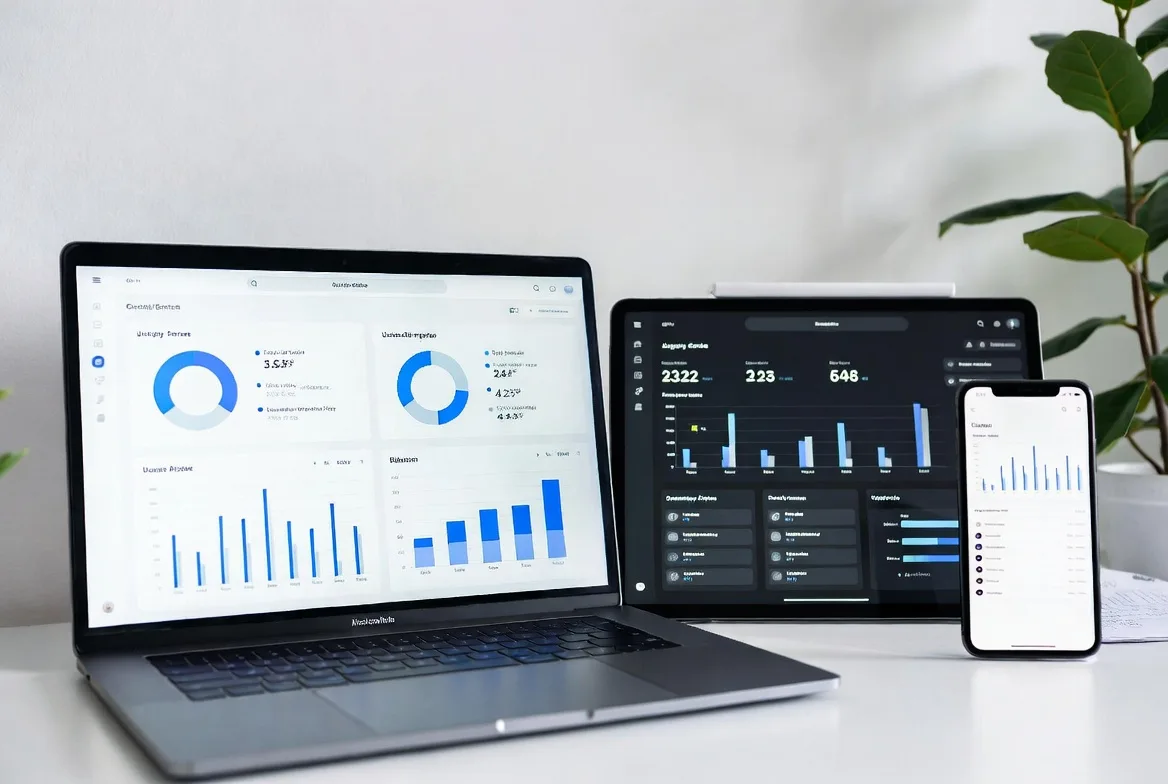
AI Meeting and Communication Tools
AI meeting tools tackle the productivity drain of poorly managed meetings. Real-time transcription captures every discussion point, automatically identifying action items and assigning them to mentioned team members. After a 45-minute strategy session, participants receive a structured summary with timestamps, decisions made, and follow-up tasks—no note-taker required.
Voice analysis features detect engagement levels and speaking time distribution. If three people dominate a ten-person meeting, the system flags the imbalance. Some platforms offer real-time suggestions: “Sarah hasn’t spoken in 20 minutes” or “This topic has extended 10 minutes past the scheduled time.”
Background noise suppression, automatic speaker identification, and integration with project management systems make these tools particularly valuable for distributed teams. A project manager in Chicago, designer in Austin, and developer in Portland can collaborate as effectively as if they shared an office, with AI handling the coordination overhead.

AI Workflow and Task Automation Tools
Workflow automation platforms connect different business systems, triggering actions based on specific conditions without manual intervention. When a sales contract reaches “signed” status in the CRM, the AI workflow automatically creates a project in the management system, assigns initial tasks to the implementation team, generates a welcome email to the client, and updates revenue forecasts.
These tools learn from patterns. If your team always follows the same 12-step process when onboarding new clients, the AI maps that sequence and suggests automation opportunities. It identifies bottlenecks—steps where tasks consistently stall—and recommends solutions or alerts managers to potential delays before they impact deadlines.
Smart routing capabilities direct work to appropriate team members based on skills, current workload, and past performance. A customer support ticket about billing issues goes to the finance-trained representative who’s currently handling the fewest active cases, rather than sitting in a general queue.
AI Data Analysis and Reporting Tools
Data analysis AI transforms spreadsheets and databases into actionable insights without requiring advanced statistical knowledge. Upload sales data from the past three years, and the system identifies seasonal patterns, predicts next quarter’s performance, and highlights which products or regions show unusual trends.
Natural language querying lets non-technical users ask questions in plain English: “Which marketing campaigns generated the most qualified leads last month?” or “Show me customer churn patterns by subscription tier.” The AI interprets the question, runs appropriate analyses, and presents results in charts or tables with explanatory context.
Anomaly detection features alert teams to unexpected changes. If website traffic suddenly drops 30% or a specific product’s return rate spikes, the system sends notifications with potential explanations based on correlated data points. This proactive monitoring catches problems before they escalate into crises.

How to Choose AI Software for Your Business
Start by mapping actual pain points rather than chasing trendy features. If your team wastes three hours weekly scheduling meetings, prioritize AI calendar tools. If report generation consumes entire afternoons, focus on data analysis platforms. The best AI software for business solves specific, measurable problems.
Team size directly impacts which tools make sense. A five-person startup benefits from all-in-one platforms that handle multiple functions through a single interface. A 200-employee company needs specialized tools that integrate with existing enterprise systems. Mid-sized businesses often adopt a hybrid approach—comprehensive solutions for core functions, specialized AI for unique needs.
Integration capabilities determine whether a tool enhances your workflow or creates new complications. Check whether the business ai applications you’re considering connect with your current CRM, project management system, communication platform, and file storage. Native integrations work more reliably than third-party connectors, which sometimes break during software updates.
Security and compliance requirements vary by industry. Healthcare organizations need HIPAA-compliant AI tools. Financial services require SOC 2 certification. International companies must address GDPR considerations. Request detailed security documentation and ask about data storage locations, encryption methods, and access controls before committing.
Budget considerations extend beyond subscription costs. Factor in implementation time, training expenses, potential productivity dips during adoption, and ongoing maintenance. A tool with a higher monthly fee but minimal setup requirements might cost less overall than a cheaper option requiring extensive customization and IT support.
Learning curve affects adoption success more than feature lists. The most powerful AI platform fails if your team won’t use it. Request trial periods, test with actual team members (not just decision-makers), and watch for frustration points. Tools that feel intuitive within the first hour of use see adoption rates 3x higher than those requiring extensive training.
Setting Up AI Tools for Teams
Begin with a focused assessment of current workflows. Shadow team members for a few days, noting repetitive tasks, communication bottlenecks, and time-consuming manual processes. Ask employees what frustrates them most about their daily work. This ground-level perspective reveals automation opportunities that management might overlook.
Pilot programs prevent organization-wide disruption while testing AI tools for teams in realistic conditions. Select one department or project team to implement the new system for 4-6 weeks. Choose a group that’s tech-comfortable and willing to provide candid feedback. Their experience guides refinements before broader rollout.
During pilots, establish clear success metrics. “Improve productivity” is too vague. Instead, measure specific outcomes: reduce meeting scheduling time by 50%, decrease report generation time from 4 hours to 30 minutes, or increase customer response speed by 2 hours. Track both quantitative data and qualitative feedback about user experience.
Training should be role-specific rather than generic. Sales teams need to understand how AI tools help manage leads and forecast revenue. Marketing teams focus on content creation and campaign analysis features. Finance teams learn data analysis and reporting capabilities. Tailored training sessions of 45-60 minutes work better than half-day overviews covering every feature.
Designate “AI champions” within each department—enthusiastic early adopters who help colleagues troubleshoot issues and discover useful features. These internal experts answer quick questions faster than IT support tickets and identify training gaps that need addressing.
Measure ROI through multiple lenses. Time savings matter, but also consider quality improvements, error reduction, employee satisfaction, and customer experience enhancements. An AI tool might not save hours weekly but could reduce costly mistakes or improve client retention—outcomes worth more than time saved.

Common Mistakes When Adopting Business AI Applications
Over-automation creates rigid systems that can’t handle exceptions. A company automated their entire customer inquiry process, routing every question through AI chatbots. When a major service outage occurred, frustrated customers couldn’t reach human agents who could actually help. Build escape hatches and manual override options into any automated workflow.
Ignoring change management leads to resistance and poor adoption. Employees worry AI tools will make their roles obsolete or expose performance gaps. Address these concerns directly through transparent communication about how AI augments rather than replaces human work. Involve team members in tool selection and implementation planning so they feel ownership rather than imposition.
Poor integration planning creates data silos and duplicate work. A marketing team adopted an AI content tool that didn’t sync with their project management system. They ended up manually copying information between platforms—adding work instead of reducing it. Map data flow between systems before implementation, not after.
Unrealistic expectations set projects up for disappointment. AI tools won’t solve organizational dysfunction or compensate for unclear processes. If your team struggles because responsibilities are poorly defined or communication is chaotic, AI will amplify those problems rather than fix them. Address fundamental workflow issues before layering technology on top.
Neglecting data quality undermines AI effectiveness. Machine learning models trained on incomplete, outdated, or inconsistent data produce unreliable results. A sales forecasting tool fed sporadic CRM data generated wildly inaccurate predictions. Clean and organize your data before implementing AI tools that depend on it.
Skipping security reviews exposes companies to data breaches and compliance violations. An HR department adopted an AI resume screening tool without verifying data handling practices. The vendor stored candidate information on unsecured servers, creating liability exposure. Always conduct security assessments before granting AI tools access to sensitive business data.
Cost Comparison of Popular AI Productivity Solutions
| Tool Name | Category | Starting Price | Best For | Key Features | Free Tier Available |
|---|---|---|---|---|---|
| Jasper AI | Writing & Content | $49/user/month | Marketing teams, content creators | Brand voice training, SEO optimization, 50+ templates | No (7-day trial) |
| Otter.ai | Meeting transcription | $16.99/user/month | Remote teams, frequent meetings | Real-time transcription, action item extraction, speaker ID | Yes (600 min/month) |
| Notion AI | Workflow & documentation | $10/user/month | Project teams, knowledge management | Automated summaries, Q&A on documents, writing assistance | No (add-on to Notion) |
| Zapier | Task automation | $29.99/month | Cross-platform workflows | 6,000+ app integrations, multi-step workflows | Yes (100 tasks/month) |
| Fireflies.ai | Meeting assistant | $18/user/month | Sales teams, client meetings | Conversation intelligence, CRM sync, custom topic tracking | Yes (800 min/month) |
| Grammarly Business | Writing quality | $15/user/month | All departments | Style guides, tone detection, plagiarism check | Yes (basic features) |
| ChatGPT Team | Multi-purpose AI | $30/user/month | Small to mid-size teams | Custom GPTs, higher usage limits, data privacy | No |
| Tableau AI | Data analysis | $70/user/month | Analytics teams, executives | Natural language queries, predictive analytics, visualization | No (14-day trial) |
Pricing reflects annual billing commitments; month-to-month options typically cost 20-30% more. Most vendors offer volume discounts starting at 10+ users, with enterprise pricing requiring custom quotes. ROI calculations should factor in time saved, error reduction, and opportunity costs of manual processes.
Free tiers work for individual users or very small teams testing capabilities, but limited features and usage caps make them impractical for sustained business use. The $15-30/user/month range represents the sweet spot for most productivity ai solutions—affordable enough for small businesses while offering robust features.
Consider total cost of ownership beyond subscription fees. Implementation services, training programs, API usage charges, and storage upgrades add 15-40% to base pricing for many organizations. Request detailed cost breakdowns during vendor evaluations.
FAQs
Security varies significantly by vendor. Enterprise-grade AI tools typically offer SOC 2 Type II certification, end-to-end encryption, and compliance with regulations like GDPR, HIPAA, or CCPA depending on your industry. Review each vendor’s security documentation, ask about data storage locations, and understand whether your data trains their AI models. Many business-focused platforms now offer private deployment options where data never leaves your infrastructure. For highly sensitive information, choose tools that guarantee data isolation and provide audit logs of all system access.
Basic proficiency with user-friendly AI tools typically requires 2-4 hours of hands-on use. Most employees can handle core functions—generating content, transcribing meetings, or automating simple workflows—within their first week. Advanced features like custom automation sequences or complex data analysis might take 2-3 weeks of regular use to master. The learning curve depends heavily on tool complexity and employee tech comfort. Teams already using similar software adapt faster than those new to AI-powered systems. Plan for a 2-4 week adjustment period where productivity might dip slightly before improvements appear.
Small businesses often see proportionally larger gains than enterprises because they’re automating tasks that previously consumed significant portions of limited staff time. A three-person company saving 5 hours weekly per employee reclaims 15 hours—equivalent to adding a part-time position. Many AI platforms offer tiered pricing that makes them accessible to small teams, with free versions covering basic needs. The key is selecting tools that solve your specific bottlenecks rather than adopting AI for its own sake. Start with one high-impact area—customer communication, content creation, or scheduling—and expand as you see results.
Modern AI productivity platforms prioritize integration capabilities, with most offering native connections to popular business software like Microsoft 365, Google Workspace, Salesforce, Slack, and major project management systems. API access enables custom integrations for specialized software. However, integration quality varies—some work seamlessly while others require manual configuration or third-party middleware like Zapier. Before purchasing, test integrations with your specific software versions and workflows. Request technical documentation and check user reviews for integration reliability. Cloud-based tools generally integrate more easily than legacy on-premise systems.
Typical outcomes include 20-40% reduction in time spent on routine tasks, 15-25% faster project completion, and 30-50% decrease in meeting-related overhead. Customer service teams often see 40-60% of inquiries resolved through AI assistance before requiring human agents. Content production speeds increase 35-50% when AI handles drafts and formatting. Error rates in data entry and report generation drop 60-80% with AI validation. However, results depend heavily on implementation quality, user adoption, and workflow optimization. Companies that treat AI tools as part of broader process improvements see better outcomes than those expecting technology alone to drive change. Most organizations notice meaningful improvements within 6-8 weeks of full deployment.
Entry-level AI tools start around $10-15 per user monthly for basic features. Mid-tier solutions with robust capabilities range from $20-50 per user. Enterprise platforms with advanced analytics, custom integrations, and dedicated support cost $50-100+ per user. Many vendors offer volume discounts, reducing per-user costs by 15-30% for teams of 25+ users. Free tiers exist but typically limit usage, features, or team size. For comprehensive AI capabilities across multiple functions, budget $30-60 per employee monthly. Small businesses might spend $300-1,500 monthly total, while mid-sized companies often invest $3,000-15,000 monthly depending on team size and tool selection.
AI productivity tools deliver tangible business value when matched to specific workflow challenges and implemented thoughtfully. The companies seeing the strongest results don’t chase every new AI feature—they identify concrete problems, select appropriate tools, train teams effectively, and measure outcomes rigorously.
Success requires balancing automation with human judgment, choosing tools that integrate smoothly with existing systems, and addressing change management proactively. Start small with pilot programs, gather real user feedback, and expand based on demonstrated ROI rather than vendor promises.
The AI productivity landscape continues evolving rapidly, with new capabilities and improved pricing emerging regularly. Revisit your tool selection annually, stay informed about developments in categories relevant to your business, and remain willing to switch when better solutions appear. The goal isn’t adopting AI for its own sake but building workflows that let your team focus on work that truly requires human creativity, empathy, and strategic thinking.